

Don’t Put the Garden to Bed Just Yet
As October arrives, fall can be an exciting time outside with opportunities to harvest the last vegetables, pick pumpkins, plant a cover crop, or even plan next year’s garden. However, fall doesn’t necessarily mean the garden is finished for the year. We should challenge our instinct to tidy everything and clean up the garden spaces before winter. What if we ask ourselves, what if some of what we consider “messy” is valuable habitat?
Some things to consider during the fall season:
Leave some plants standing. Seed heads can provide food for birds; stems and plant debris can provide shelter/habitat for insects; and ornamental grasses can add fall/winter interest rather than being cut back immediately. It may not look as tidy, but it is healthy/ecologically useful to many species big and small.
Fallen leaves. Breaking up leaf litter with a lawn mower is one option. However, many insects such as fireflies, moths, and native bees hide in leaf litter during the winter so chopping up leaves may chop up beneficial insects. Another option is to move leaves to an area where they can settle and slowly turn into soil. Leaves return organic matter to the soil and enrich the environment above and below ground.
Fall wildlife. The garden is still active even when flowers are fading. Pollinators and other insects are still using the landscape. It is an especially important time for birds, as they look for seeds and insects to prepare for winter.
So, before we begin our fall and winter garden cleanup, let’s walk our garden one more time with a different approach and really experience the seasonal change. Look for seed heads, berries, and changing foliage. Listen for and hear the insects, birds, and other wildlife. Feel interesting textures and smell late flowers. Do you see anything now that you didn’t notice in summer? Some cleanup is important, and there is a threshold of beneficial “mess” and genuinely problematic plant debris.
Remove anything that could contribute to disease problems or interfere with paths or structures. The goal isn't neglect; it's more intentional gardening and experiencing the changing seasons regardless of the landscape you are working with.
(By Elizabeth C. - Master Gardener Intern)
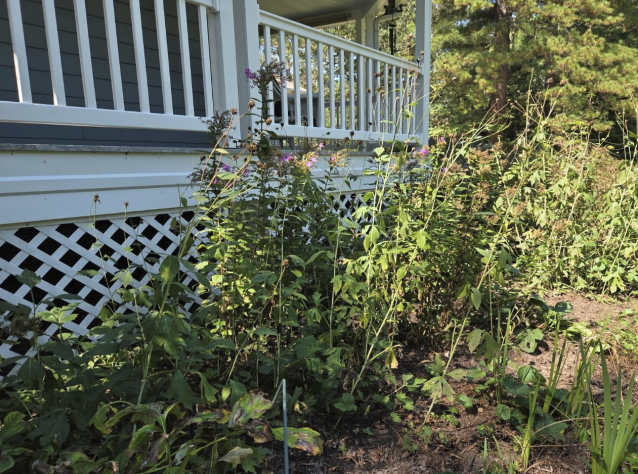
A slightly messy flower garden that supports wildlife through the winter