How are your hydrangeas?
Hydrangeas are very susceptible to Cercospora leaf spots and, to a lesser extent, anthracnose in landscape. There is even a fungus named Cercospora hydrangea.
Cercospora:
Usually starts on the bottom leaves of the plant but does not infect the flowers
Forms circular spots, which start out with a purple tinge and as they grow larger, they develop a lighter halo. Characterized as a “frog egg” affect
Causes cosmetic damage but if heavily infected can cause complete defoliation and weaken the plant
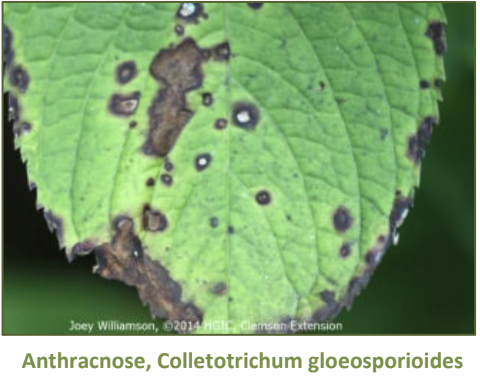
Anthracnose:
Brown lesions appear simultaneously throughout the plant
Circular or slightly irregular, with centers turning tan with final destruction of the leaf
Usually occurs in more crowded greenhouses without good air circulation – already started on the plant before you bring home
Prevention methods are similar for both Cercospora and Anthracnose:
Avoid overhead watering. Minimize wet leaves. Use drip irrigation or soaker methods. If using sprinklers, run early in the morning to allow foliage to dry quickly.
Space plants and prune to improve air circulation. When pruning, wipe pruners with 70% rubbing alcohol between each cut.
Remove and destroy or dispose of diseased plant leaves and fallen materials each season. Clean up fallen leaves and debris beneath plants. Send plant materials to the dump. Do not compost diseased materials.
Maintain plant health with proper nutrition and irrigation. Healthy plants are more disease-resistant and more tolerant of minor damage.
Avoid overfertilizing, which encourages lush, tender growth that is more susceptible to disease. If fertilization is necessary, use a slow-release or lower-nitrogen formula to maintain moderate growth.
Chemical Controls:
Fungicides will slow but not cure Cercospora or Anthracnose. For both, best application time is in the spring on new growth with continued periodic applications
throughout the season. Anthracnose is more difficult to control than Cercospora.
On another note:
Common hydrangea problems include:
A lack of blooms from improper pruning. Know when and where. Pruning at the wrong time or cutting too deeply can accidentally remove next season's flower buds. Some hydrangeas bloom on old wood and some on new.
Winter damage
Fungal leaf spots
Soil pH imbalances
Effective management includes pruning immediately after blooming, ensuring adequate sun, and testing the soil to adjust for the desired flower color. The desired pH for hydrangea in general is acidic soil (pH 5.0–5.5), which lets plants absorb aluminum for blue blooms. Alkaline soil (pH 6.5–7.0) blocks aluminum absorption, causing pink blooms. https://www.lorraineballato.com/changing-the-color-of-your-hydrangeas/
(Written by Gwen H. - Help Desk Co-Chair)
Contact the Help Desk for questions about the problems you see with your plants! Send an email to yk.pq.mg@gmail.com or use the form on the website.
Attend our pruning workshop on November 14th at the York Learning Garden from 2:30 - 3:30 for some hands-on practice with proper pruning techniques.
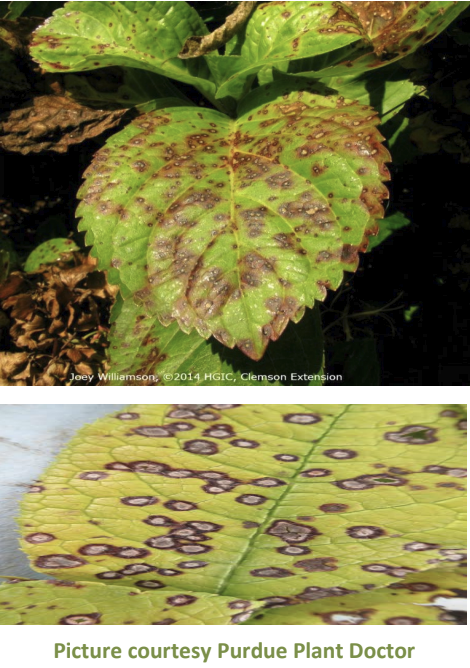
Examples of Cercospora